If you have lived in the same Indianapolis home for years, the idea of downsizing can feel bigger than moving boxes or cutting square footage. You may be asking a deeper question: How do you simplify your home without losing the people, places, and routines that make life feel like yours? The good news is that with the right plan, you can move into a home that fits your next chapter while staying connected to your community. Let’s dive in.
Why downsizing is really about community
In Indianapolis, downsizing often has less to do with owning less and more to do with protecting your daily life. That can mean keeping an easy drive to friends, staying near your place of worship, holding onto favorite walking routes, or making sure errands still feel manageable.
When you frame the move this way, your home search becomes clearer. Instead of asking only how many bedrooms or bathrooms you need, you can also ask which location helps you keep the rhythms that matter most.
Start with your current routine
Before you look at smaller homes, take stock of what you do each week. Think about where you go for groceries, medical appointments, exercise, social visits, volunteering, and recreation.
This step matters because the right downsize should support your lifestyle, not interrupt it. A smaller home can be a great fit, but only if it still keeps you connected to the places that anchor your week.
Map the places you use most
The City of Indianapolis offers the My Neighborhood mapping tool so you can search by address, neighborhood name, or map location. The GIS hub also includes a search for neighborhood organizations, which can help you compare your current area with a possible new one through the same community lens.
As you explore options, compare your current address to any downsizing address you are considering. Look at nearby parks, neighborhood groups, major roads, and familiar destinations so you can judge the move by lifestyle fit, not just price or floor plan.
Focus on social anchors
A successful downsize usually keeps you near the places that help you stay active and connected. In Indianapolis, parks, trails, and community centers can play a major role in preserving that sense of normalcy.
If walking, group activities, or casual meetups are part of your week, location becomes just as important as home size. That is why social anchors should be part of your search from day one.
Consider parks and activity centers
Several Indy Parks facilities offer programming that may matter during a transition. The Broad Ripple Park Family Center offers senior activities, and Washington Park Family Center offers Senior Line Dancing. Municipal Gardens also serves seniors, youth, and people with disabilities.
If these types of resources matter to you, it may make sense to look at homes with easy access to the facilities you already use, or similar ones in a new area. A move feels less disruptive when the structure of your week can stay familiar.
Look near trails and connected corridors
The Monon Trail runs from 10th Street to 96th Street and passes Broad Ripple Village and several parks. The White River Trail connects White River State Park, the Indianapolis Zoo, the Central Canal Towpath, and the Monon Trail.
For many homeowners, living near these corridors can make it easier to keep walking, visiting, and socializing built into everyday life. If your goal is to simplify without feeling isolated, access to these routes may deserve a place on your priority list.
Choose a home type that fits the next chapter
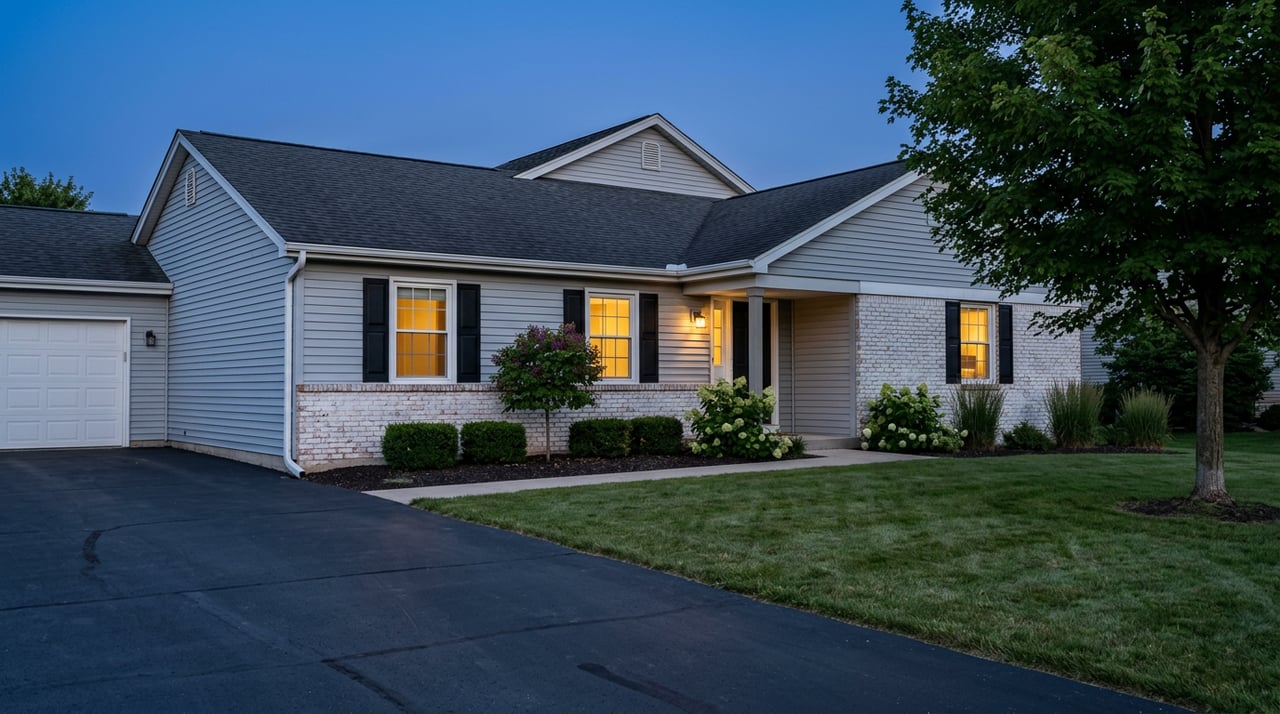
Downsizing does not mean there is only one right kind of property. Depending on your goals, you may prefer a condo, townhome, patio home, or smaller single-family home.
The key is to match the property type to the life you want to keep living. If low maintenance matters most, one option may stand out. If privacy, storage, or room for visiting family matters more, another may be a better fit.
Think about walkability and convenience
A 2025 MIBOR market report noted that walkable neighborhoods with mixed-use property types are becoming a consumer preference. That supports looking at smaller homes in areas where errands, services, and everyday needs may be easier to reach.
When you compare options, think beyond square footage. Ask whether the home supports simpler upkeep, easier access, and less time spent driving across town for basic tasks.
Plan transportation before you move
Many homeowners want a smaller home but also want to protect their independence. Transportation should be part of that conversation early, especially if driving less is part of your long-term plan.
In Marion County, there are services that can help support mobility after a move. Knowing what is available can expand your options and reduce stress.
Know the Marion County transportation options
IndyGo Access provides reservation-based shared-ride service throughout all of Marion County, seven days a week, with the same hours as local service. This can be an important support if you want flexibility beyond relying only on family or friends.
CICOA’s Way2Go transportation program says adults 60 and older who live and travel within Marion County can use senior transportation for medical, pharmacy, and grocery trips. It also includes shuttle service to grocery stores, shopping centers, banking institutions, and other locations.
For older homeowners, these services can help preserve independence after moving to a smaller home. That makes location planning about more than convenience. It becomes part of staying confident in daily life.
Build more time into your sale and purchase
One of the biggest downsizing mistakes is assuming everything will line up perfectly. In reality, many moves work better when you leave room for overlap and decision-making.
According to Redfin’s March 2026 Indianapolis market snapshot, the median sale price was $245,000, median days on market was 55, and 883 homes sold. The same report says Indianapolis home prices were 44% below the national average and overall cost of living was 10% lower than the national average.
Avoid a rushed transition
A market with a 55-day median time on market suggests you should not count on an immediate sale and same-day purchase. It is often smarter to discuss options like a longer closing window, temporary housing, or a rent-back arrangement before you list.
This matters even more if your move is community-focused. You do not want a rushed timeline to force a fast purge of belongings or disrupt weekly routines, caregiving responsibilities, or regular visits with friends and family.
Review taxes and monthly costs carefully
A smaller home can reduce expenses, but the math is not always simple. Before you move, compare the full picture, including taxes, insurance, HOA fees, utilities, and any temporary moving costs.
This is especially important if you are moving from a long-time home with a very different cost structure than the one you are considering now.
Understand capital gains basics
The IRS says a primary residence sale can exclude up to $250,000 of gain, or $500,000 for many married couples filing jointly, if the ownership and use tests are met. In general, that means the home was owned and used as your main home for two of the previous five years, according to IRS Topic No. 701.
That same IRS guidance also notes that a condominium, cooperative apartment, mobile home, or houseboat can qualify as a main home. If you are comparing different downsizing options, that is a helpful reminder that your next home type may still fit the rules that apply to a primary residence.
Compare Indiana property tax factors
Indiana property taxes are paid in arrears and are typically billed in two installments, according to the Indiana Department of Local Government Finance. The department also says deductions and credits generally do not need annual reapplication unless the property is sold or title changes, and a new deduction filed by January 15 is reflected on the next year’s bill.
Indiana also has property tax caps of 1% for homestead properties, 2% for other residential and agricultural land, and 3% for other real and personal property, based on state guidance on property tax caps. That makes homestead status and property type important when you compare a larger home with a condo or smaller owner-occupied property.
Look at monthly carrying costs
According to Census QuickFacts for Indianapolis, median selected monthly owner costs are $1,462 with a mortgage and $548 without one, while median gross rent is $1,156. For homeowners without a mortgage, that difference suggests downsizing may create meaningful monthly cash-flow relief.
Still, do not stop at the headline numbers. HOA fees, insurance, utilities, maintenance, and short-term rental costs can all affect whether a move improves your monthly budget.
Make decluttering easier on yourself
The emotional side of downsizing is real. If you have built a life in your current home, every room may hold memories, and that can make decisions feel heavier than expected.
A practical system helps. Instead of trying to sort everything at once, use simple categories and work room by room.
Use six sorting categories
A helpful framework is:
- Keep
- Donate
- Sell
- Gift
- Scan
- Shred
Measure the new space before making final decisions on furniture and large items. That can prevent expensive mistakes and take pressure off emotional choices in the middle of the move.
Stage with warmth, not emptiness
If you are selling a long-time home, staging does not need to erase its personality. Often, the most effective approach is to create edited rooms, clear walkways, and a few meaningful objects rather than trying to make the home feel empty.
That balance can help buyers see the space while still honoring the life you built there. In a downsizing move, the emotional story matters just as much as the resale mechanics.
Keep the right goal in focus
The most sustainable downsizing plan is the one that protects what makes daily life feel normal. If your new home is smaller but still supports your relationships, routines, and independence, you are not giving something up. You are making space for a next chapter that fits better.
If you are thinking about downsizing in Indianapolis, the right strategy starts with your lifestyle, then works backward into timing, home type, and location. When you want a thoughtful plan for selling your current home and finding the right next fit, Home Strategy Group is here to help.
FAQs
What does downsizing in Indianapolis without losing community really mean?
- It means choosing a smaller or simpler home while protecting the routines, relationships, and nearby places that are part of your everyday life.
How can Indianapolis homeowners compare neighborhoods before downsizing?
- You can use the City of Indianapolis My Neighborhood tool to compare addresses, neighborhood areas, parks, and neighborhood organizations.
What transportation options are available for older adults in Marion County?
- Marion County residents may be able to use IndyGo Access and CICOA’s Way2Go program for shared rides and certain essential trips.
What home types should Indianapolis downsizers consider?
- Depending on your needs, you may want to compare condos, townhomes, patio homes, or smaller single-family homes based on maintenance, location, and access to daily errands.
What tax issues should Indianapolis homeowners review before downsizing?
- You should review potential capital gains rules, Indiana property tax timing, homestead status, property tax caps, and the monthly carrying costs of the next home.
How should homeowners prepare belongings before a downsizing move in Indianapolis?
- A simple plan is to sort items into keep, donate, sell, gift, scan, and shred categories after measuring the new space first.