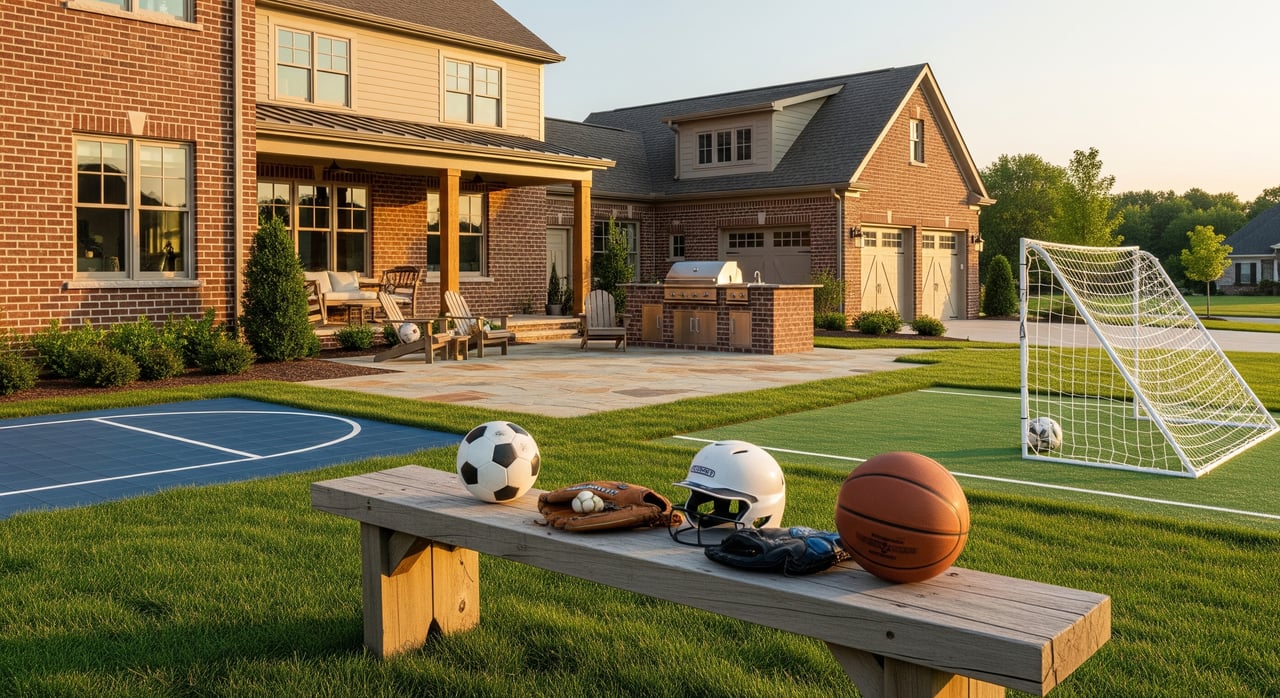
If your weeknights revolve around carpools, practices, and cheering from the sidelines, you are not alone. Many Brownsburg families choose where to live based on how fast they can get to fields, courts, and indoor training. In this guide, you will see how to evaluate Brownsburg neighborhoods through a youth-sports lens so you can spend less time in traffic and more time at the game. Let’s dive in.
Why Brownsburg works for sports families
Brownsburg sits in Hendricks County within the Indianapolis metro. Families often describe it as a suburban community with strong growth and a practical, family-focused feel. That mix sets the stage for a vibrant youth-sports lifestyle.
Brownsburg Community School Corporation (BCSC) is a major draw. School athletics and extracurriculars tend to support well-maintained complexes at the high school and middle schools. Those facilities often double as hubs for youth practices and games.
Parks and Recreation also plays a big role. Municipal departments run leagues, maintain fields, and may operate indoor spaces or pools. These public facilities shape daily life by boosting access to programs and by influencing walkability and traffic patterns on game days.
What youth-sports amenities to prioritize
School athletic complexes
Why it matters: These campuses often include stadiums, multi-purpose fields, tracks, and practice areas. Living near them can shorten weekday practice commutes and make evening games simple.
What to check:
- School property maps and after-hours public access rules
- Parking capacity and lights for night use
- Where practice fields sit relative to neighborhoods and safe crossing points
Multi-field municipal parks and sports complexes
Why it matters: Multi-field setups can host several games at once and may draw weekend tournaments. That means convenience for your schedule and occasional spikes in local traffic.
What to check:
- Number and type of fields, plus turf vs. grass
- Lighting, restrooms, concessions, and shelters for families
- Tournament calendars and typical weekend activity
Neighborhood playgrounds and mini courts
Why it matters: On-site tot lots, open lawns, or half-court basketball give kids quick outdoor time without a drive. This is especially helpful between homework and evening practice.
What to check:
- HOA rules for use and guest policies
- Age-appropriate equipment and posted hours
- Maintenance responsibilities and fee coverage
Indoor recreation centers and pools
Why it matters: Winter training depends on indoor space like gyms, pools, or turf. Reliable access helps year-round athletes stay on track.
What to check:
- Membership vs. pay-per-use costs
- Lane or court availability for lessons and team rentals
- Birthday or team event policies
Clubs and grassroots programs
Why it matters: Local soccer clubs, little league, and travel baseball or basketball often set the pace for your calendar. Their preferred fields or school partners determine where you will drive most often.
What to check:
- Registration numbers and age groups
- Typical practice locations and times
- Cost differences between recreational and travel options
Proximity bands that save you time
You can use two simple distance bands to focus your search.
- Walkable access: 0.5 to 0.8 mile is a 10 to 15 minute walk for most families with young children. Prioritize safe sidewalks, connected trails, and marked crossings near school campuses or parks.
- Short drive access: About 1 to 3 miles often balances quiet residential streets with quick reach to practice fields and weekend games.
Map both walking routes and typical driving routes. A school campus layout, one-way streets, or a lack of crosswalks can make the driving route faster even if the distance looks walkable on a map.
Neighborhood types and tradeoffs
Newer subdivisions
These areas often feature single-family detached homes on modest yards. Typical lot sizes can fall in the 0.15 to 0.35 acre range. You might see sidewalks, small parkettes, and sometimes community courts.
Pros for sports families:
- Sidewalk networks that support walks to practice or a quick scooter ride
- HOA-maintained common areas that reduce yard work time
Considerations:
- HOAs are common and may limit permanent backyard structures like large playsets or batting cages
- Parking rules could restrict trailers or RVs used for tournament travel
Established or rural-edge options
These homes may offer larger lots that can reach 0.5 acre to over 1 acre. That extra space suits backyard drills or a larger play area.
Pros for sports families:
- Big yards for free play and informal practice
- More privacy and storage potential
Considerations:
- Longer drives to centralized fields or indoor facilities
- Fewer sidewalks or connected trails
Townhomes and apartments
For many young families, lower maintenance outweighs the need for a private yard. In these communities, proximity to well-equipped parks becomes the priority.
Pros for sports families:
- Reduced upkeep so you can focus on practices and games
- Sometimes closer to central corridors that speed up drives to fields
Considerations:
- Less storage for gear compared to larger single-family homes
- Greater reliance on public fields and indoor centers
HOA fees and rules to review
Many newer subdivisions in Brownsburg include HOAs. Basic maintenance and amenity coverage often falls between nominal fees around 200 dollars per year and several hundred dollars. Pools or clubhouse access can increase fees.
Key HOA questions:
- Are playsets, nets, cages, or temporary goals allowed in backyards?
- What are parking rules for guests on game days or for team equipment?
- Which amenities are maintained and how often?
Request HOA covenants and amenity maps early so you can plan for gear storage and weekend hosting.
Quick map to narrow your search
Use this three-part lens to group neighborhoods before you tour.
- Walk-to-practice clusters: Areas within roughly 0.5 to 0.8 mile of a high school or middle school athletic complex, or a multi-field municipal park. Look for sidewalk continuity and controlled crossings.
- Quick-drive clusters: Subdivisions 1 to 3 miles from major fields that still connect to main corridors. This often balances quieter streets with reliable access.
- Year-round training clusters: Homes near indoor recreation centers or pools, especially if you have swimmers, club soccer, or off-season baseball.
As you group options, note where fields sit within each campus, where vehicles enter and exit, and where overflow parking tends to spill onto neighborhood streets.
What to check at an open house
Bring a short checklist so you can compare homes with a sports-first mindset.
- Confirm your nearest practice fields and typical drive times during rush and early evening hours.
- Walk the route to a park or school corner to assess sidewalks, lighting, and crossings.
- Ask for HOA covenants and any amenity map. Confirm rules on playsets, cages, trailers, and guest parking.
- Check for garage and mudroom storage that can handle gear, coolers, and lawn chairs.
- Look for laundry capacity to manage uniforms during peak season.
- Ask about weekend traffic during tournaments or home football nights.
Parking and game-day traffic
Neighborhoods near big fields can see heavier weekend traffic. On-street parking often fills first and can extend beyond a block or two. If you plan to host carpool drop-offs, look for:
- Driveways with easy turnarounds or wide side streets for quick stops
- Sidewalks and marked crossings to move kids safely from parked cars to fields
- Any resident-only or time-limited parking restrictions
If you value quiet weekends, place a little more distance between your home and high-capacity venues while staying inside your 1 to 3 mile drive band.
How to build a custom sports map
A clear process helps you compare neighborhoods quickly.
- Identify your priority facilities
- List the locations of high school and middle school athletic complexes, multi-field municipal parks, indoor rec centers, and common practice sites for your clubs.
- Draw proximity bands
- Use mapping tools to sketch 0.5 to 0.8 mile walk zones and 1 to 3 mile drive zones. Mark the safest walking routes and typical evening drive times.
- Check access and policies
- Review school district facilities use rules for after-hours access. Look at parks and recreation program calendars to see when fields are busiest.
- Layer neighborhood details
- Note sidewalks and trail connections. Record HOA presence and fee ranges. Track typical lot sizes, common bedroom counts, and parking norms.
- Compare lifestyle fit
- Weigh tradeoffs between yard space, commute times, and weekend traffic. Factor in indoor training access for winter months.
Ready to find your fit?
Choosing the right Brownsburg neighborhood is about matching your daily sports routine to the layout of schools, parks, and indoor training. With a smart map and the right questions, you can reclaim weeknights and enjoy game days with less hassle. If you want a tailored shortlist with walkable options, quick drives, and HOA insights, request your personalized market consultation from Home Strategy Group.
FAQs
Which Brownsburg neighborhoods are walkable to practice fields?
- Look for areas within 0.5 to 0.8 mile of a high school or middle school athletic complex or a multi-field municipal park, and confirm safe sidewalks and crossings.
Where do most youth leagues hold practices versus games in Brownsburg?
- Many programs mix practice sites at neighborhood fields or school practice areas with weekend games at larger municipal sports complexes; verify with each league.
Are Brownsburg school athletic facilities open to the public after hours?
- Many districts allow community use during non-school hours and may require permits or rental fees for events; check the district’s facilities use policy.
What HOA rules might affect backyard sports equipment?
- Covenants can limit permanent structures, nets, cages, or parking of trailers and RVs; request HOA documents and amenity maps early in your search.
What indoor options support winter training in Brownsburg?
- Indoor recreation centers, high-school gyms used by clubs, and private training spaces can offer year-round access; compare membership and rental availability.
How do tournaments affect neighborhood life near big fields?
- Expect heavier weekend traffic, on-street parking overflow, and busier local restaurants; many families appreciate the convenience despite periodic crowds.